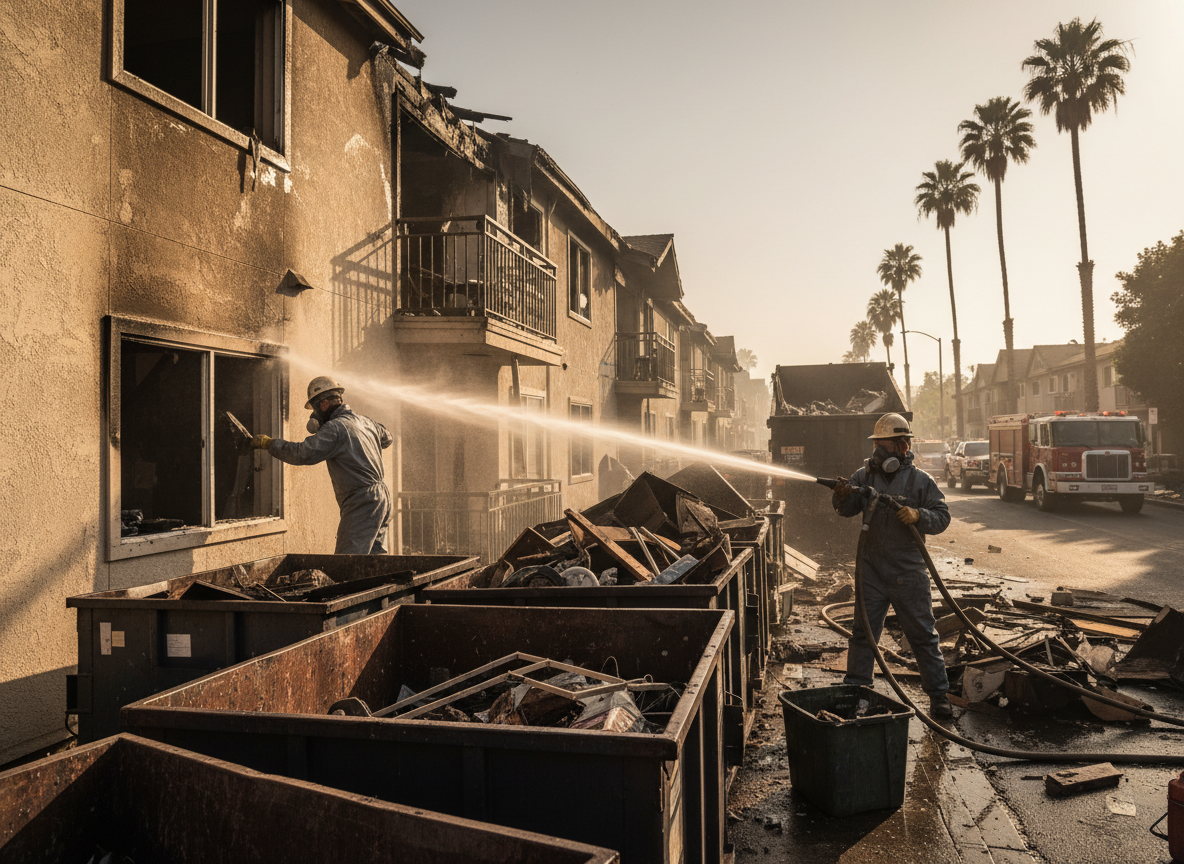
Van Nuys apartments built from the 1950s through 1970s often feature plaster-over-lath walls and single-pane windows that allow soot to embed deeply during fires. Hot dry summers increase electrical load from air conditioning, raising the chance of hidden attic fires that send smoke through ceiling cavities into neighboring units. Cleanup requires removing drywall sections to reach trapped residue while protecting adjacent apartments from cross-contamination through shared ventilation ducts.
Smoke from apartment fires travels quickly through common corridors and laundry chutes in buildings near Van Nuys City Hall and Sherman Oaks adjacent areas. Porous materials like carpet padding and acoustic ceiling tiles retain odors long after visible soot is gone, especially when humidity spikes after a rare rain. Technicians must test for pH levels in residue because alkaline soot from synthetic furnishings corrodes copper wiring and HVAC coils if left untreated.
Multi-story apartments around Lake Balboa Park frequently have rooftop HVAC units that pull smoke downward into lower floors. Cleanup crews isolate each unit with negative air machines before removing affected insulation and cabinetry. Failure to address subfloor soot in older wood-frame buildings near North Hollywood leads to persistent odors that surface months later when temperatures rise.
Technician insight
In Van Nuys, the thing that catches most people out with Apartment fire cleanup is how quickly smoke moves through the old knob-and-tube wiring chases in 1950s buildings near Woodman Ave; once it reaches the attic insulation, you have to open every ceiling in the stack below or the smell returns the first time the AC kicks on during a hot summer.
Downtown Van Nuys apartment kitchen fire
A grease fire in a second-floor unit near Van Nuys City Hall sent smoke through the laundry chute into three lower apartments. Soot had coated the shared ductwork and settled inside wall cavities. Crews isolated the stack, removed affected insulation, and cleaned the HVAC before odors could migrate further into adjacent units.
How it works
- 1
Initial Assessment
Inspect all affected units and shared systems to map smoke migration paths through vents and walls.
- 2
Containment Setup
Seal doorways and install negative air pressure to prevent soot from spreading to unaffected apartments.
- 3
Soot Removal
Clean surfaces with appropriate agents and remove porous materials that cannot be restored.
- 4
Odor Neutralization
Apply thermal fogging and ozone treatment to HVAC ducts and wall cavities.
- 5
Final Clearance
Test air quality and surfaces before returning keys to residents.
Pricing
Costs depend on number of units affected, depth of soot in cavities, and whether HVAC systems require full disassembly.